[ Website ]
How long does it take to design and build a website?
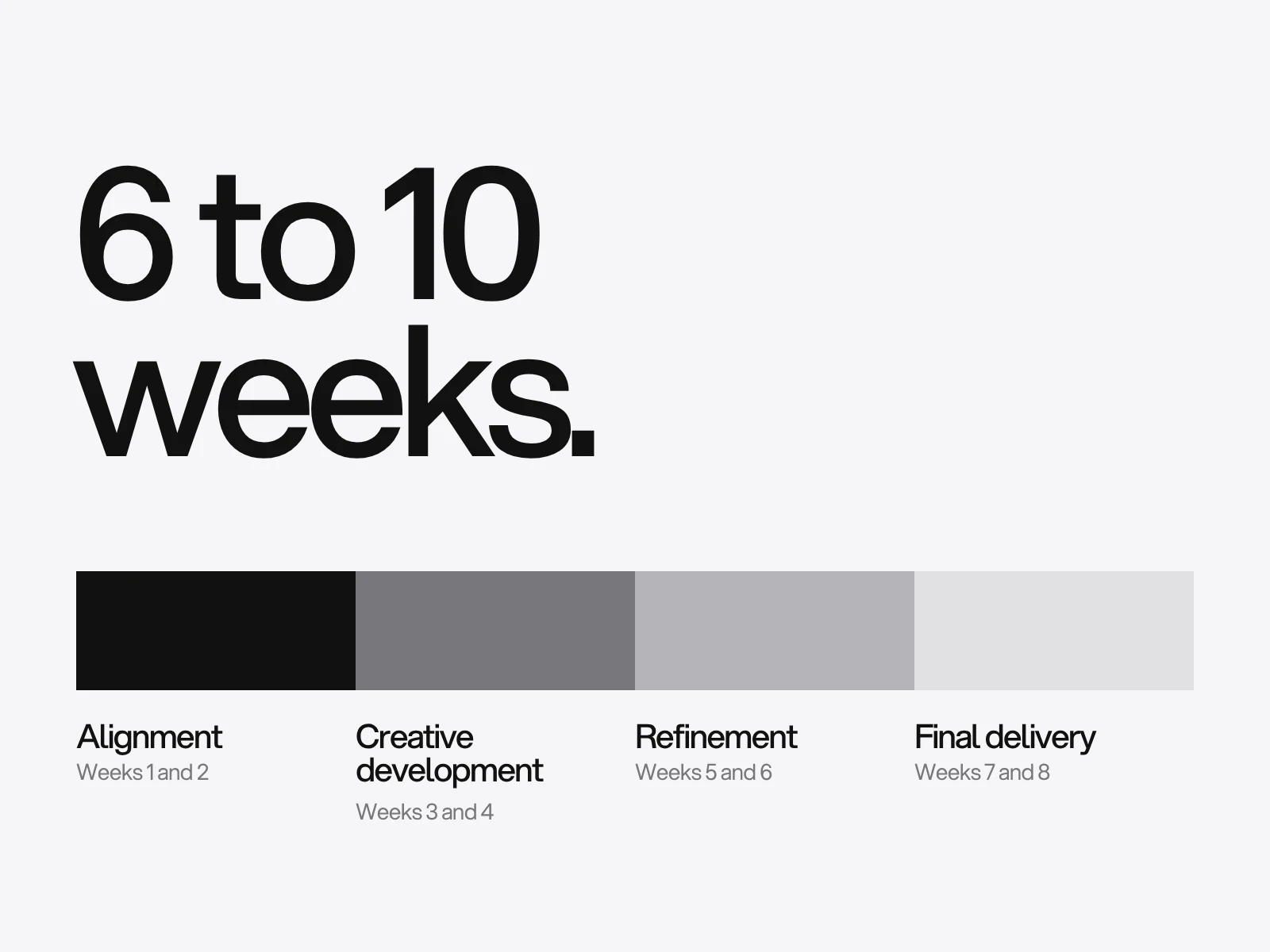
A typical business website takes 6 to 10 weeks from the first conversation to launch. One-page sites move faster, larger builds with a CMS, e-commerce or integrations take longer. Content and decision speed matter more than design speed.
By LAIN5 min read
Most business websites take 6 to 10 weeks from the first conversation to launch. That is the range we plan with at LAIN for a typical website design and development project. A one-page site can move faster, and a larger build with a CMS, e-commerce or custom features can take longer. We confirm the timeline once we have read your brief, because the honest answer depends less on how fast designers work and more on scope, content and how quickly decisions get made.
How long does it take to design a website?
For a typical website design and development project, plan for 6 to 10 weeks. That covers the whole journey: understanding your goals, designing the pages, building them, refining the details and launching.
The range is wide because websites are not all the same size. A focused marketing site with a handful of pages sits at the short end. A site with many page templates, a blog, e-commerce or several integrations sits at the long end. Our other services run on their own clocks: branding takes 4 to 6 weeks, app and dashboard design 8 to 12 weeks and graphic design 2 to 4 weeks. Social media design is ongoing.
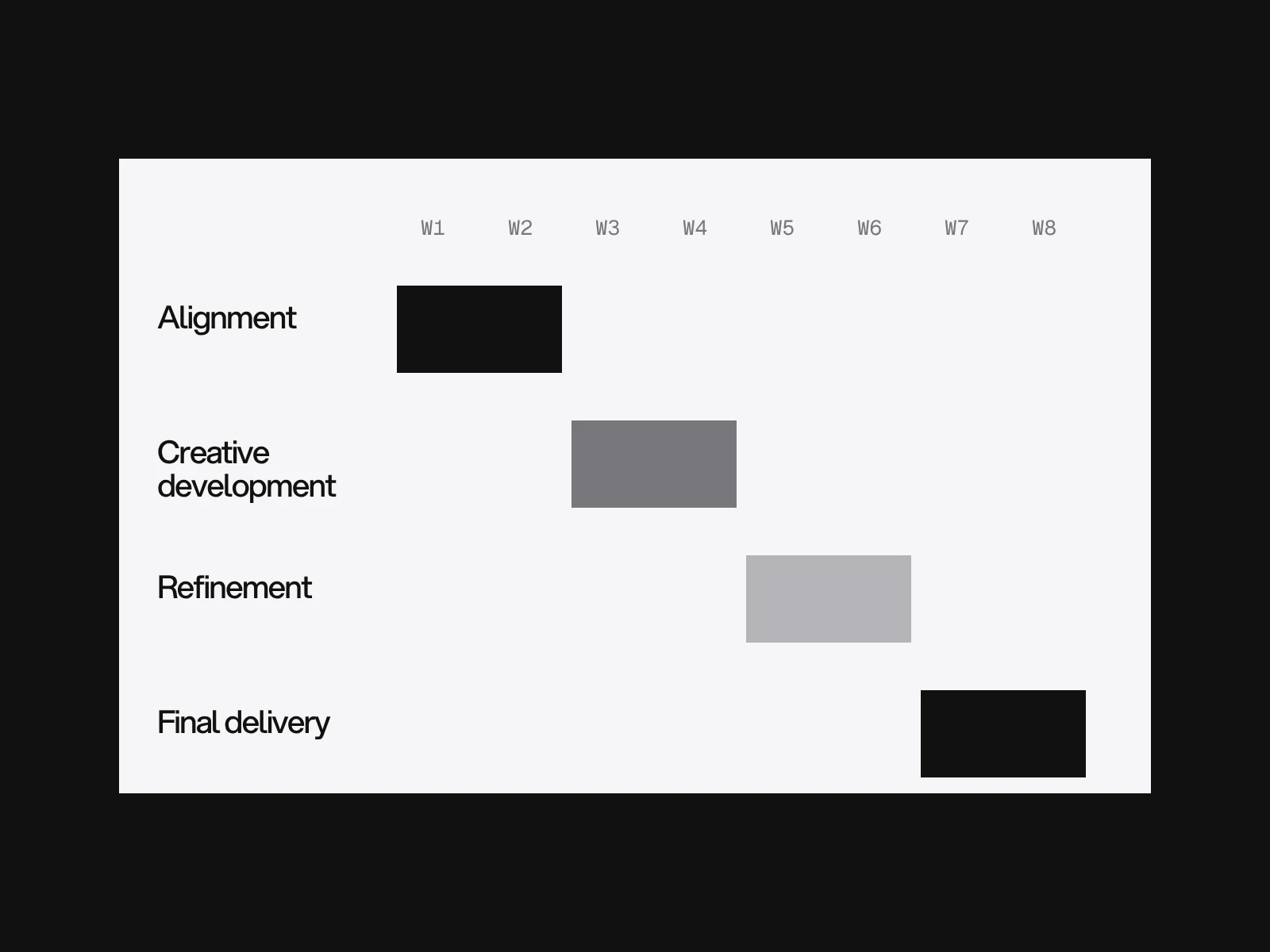
The four phases of a website project
Every LAIN project follows the same four phases, whatever the service. For a website they look like this:
StartA typical website: 6 to 10 weeksLaunch
- 01AlignmentMoodboard, questionnaire, goals
- 02Creative developmentConcepts, page design, first presentations
- 03RefinementIterations, feedback, quality checks
- 04Final deliveryFiles, guidelines, handover, launch
| Phase | What happens | What we need from you |
|---|---|---|
| Alignment | A moodboard and a questionnaire, brand analysis and research, your goals and objectives | A clear brief, references, brand assets |
| Creative development | Concept exploration, page design, first presentations and creative direction | Feedback on direction, copy for the key pages |
| Refinement | Design iterations, your feedback built in, detail refinement and quality checks | One consolidated round of feedback at a time |
| Final delivery | File preparation, guidelines, organised assets, handover and launch | Final approval, access to your domain and hosting |
Design and build overlap when the project is planned well. Once the layout and components are agreed, development can start on those pages while the rest are still being refined.
What makes a website take longer
Almost every delay we see traces back to one of these:
- Content that arrives late. Pages cannot be finished around placeholder text. Copy, photography and product information are the most common thing a project waits for.
- Too many voices. Feedback that comes from five people in five directions has to be reconciled before anyone can act on it.
- Scope that grows. A new page type, a new integration or a second language is a bigger change halfway through than at the start.
- Custom functionality. Booking, memberships, calculators, e-commerce and connections to other tools each add design, build and testing time.
- Slow approvals. A review that sits for a week adds a week.
How to shorten your website timeline
You can save more time than any studio can by working faster:
- Name one decision maker. Collect everyone's opinions, but send us one set of decisions.
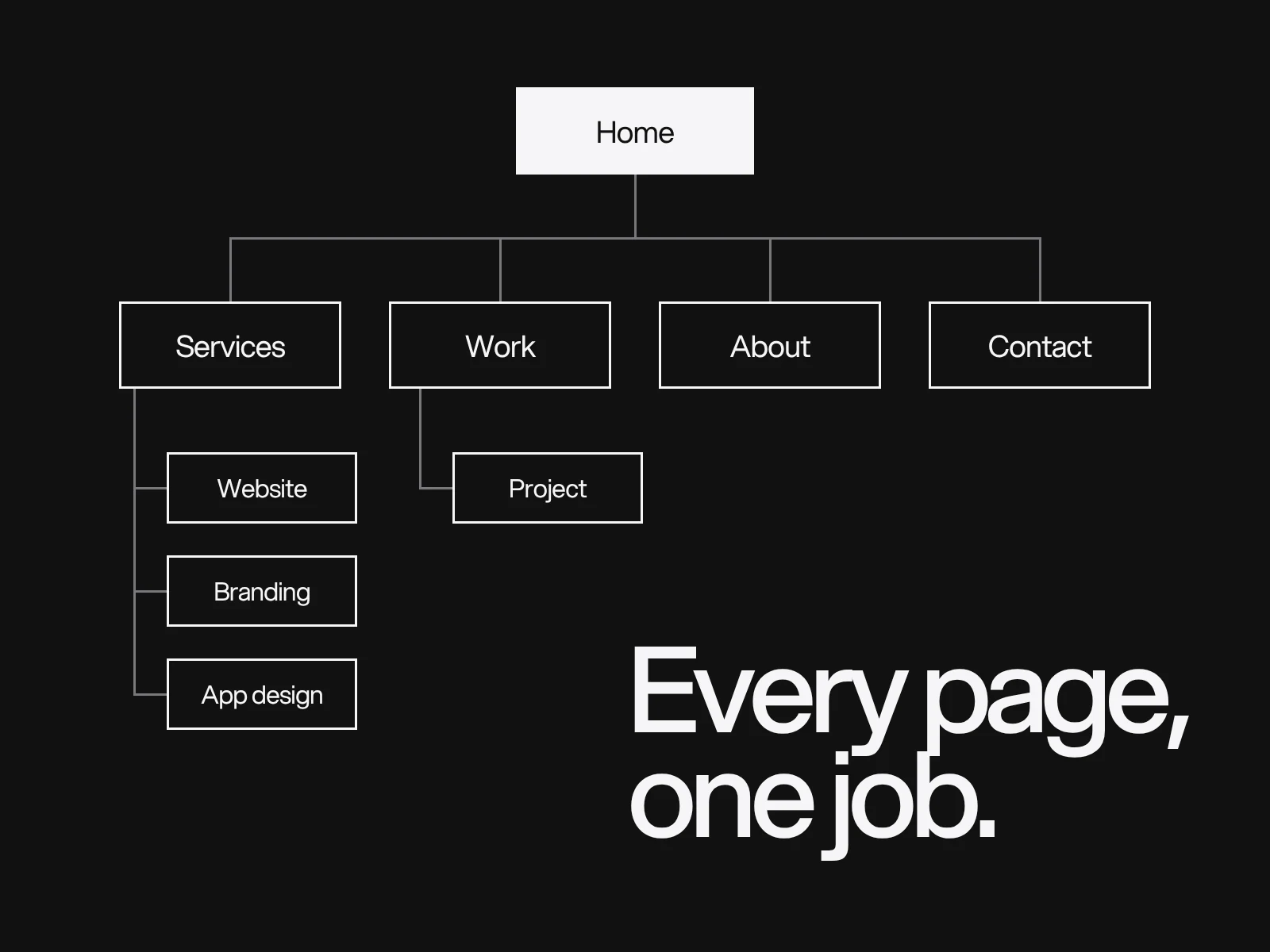
- Agree the sitemap early. Knowing the pages up front stops scope drifting later.
- Send content in order of importance. Home, services and contact first, the rest while we design.
- Batch your feedback. One list per round is faster than comments in pieces.
- Book review slots. If you know when you will review, the project keeps its pace.
Website timelines by type of project
Scope moves the timeline more than anything else. As a guide, not a promise:
| Type of site | Where it sits in the range | Why |
|---|---|---|
| Focused marketing site, a handful of pages | Toward the shorter end | Few templates, little content to prepare |
| Company site with a blog or case studies in a CMS | Around the middle | More templates, a content structure to plan and fill |
| E-commerce or a site with bookings, memberships or integrations | Toward the longer end, sometimes beyond it | Product data, checkout flows and third-party tools each need design, build and testing |
We say where your project falls once we have read the brief, and we say it before work starts.
An example eight week plan
Every project is different, but this shows how the phases can sit on a calendar. It is an illustration, not a quote:
- Weeks 1 and 2, alignment: kick-off, the questionnaire, moodboard, sitemap and content plan.
- Weeks 3 and 4, creative development: the key page designs, presented and discussed.
- Weeks 5 and 6, build and refinement: pages built, responsive behaviour and interactions refined, feedback folded in.
- Weeks 7 and 8, delivery: content loaded, quality checks on real devices, final approvals and launch.
Notice what the plan depends on: content ready by week 3, one consolidated round of feedback per phase and a launch date the team has agreed.
What to prepare before you start
Have these ready for the first conversation, even in rough form: your goals for the site, the pages you think you need, two or three websites you like and why, your logo and brand colours, and who has the final say. If you do not have a brand yet, branding comes first and the website follows it.
When you are ready, send us a brief. We read it, reply within a day and come back with a clear proposal and timeline.
Frequently asked questions
How long does it take to build a website in Webflow?
The build is part of the 6 to 10 week range for a typical website project. The platform does not change how long design, content and feedback take; it mostly makes the build itself efficient. We build in Webflow, Framer and Shopify.
Can a website be finished faster than 6 weeks?
A small, focused site can move faster, and we will say so when we read your brief. A fully designed site that reflects your brand still needs the alignment, design and refinement phases, so rushing them usually costs quality.
Does development wait for the whole design to be finished?
No. When the layout and components are agreed, build work can start on those pages while the remaining pages are still being designed and refined.
What slows down a website project the most?
Content that arrives late is the usual cause: copy, photography and product information are what projects most often wait for. Conflicting feedback, growing scope, custom functionality such as bookings or e-commerce and slow approvals also add time. A review that sits for a week adds a week.
What do I need to prepare before starting a website project?
Have your goals for the site, the pages you think you need, two or three websites you like and why, your logo and brand colours, and who has the final say. Rough versions are enough. If you do not have a brand yet, branding usually comes first and the website follows it.
Sources and fact check
The timelines, services and process described here are LAIN's own, as set out on our About and FAQ pages. Last reviewed 27 Oct 2026.
[ From our work ]
[ Keep reading ]